
Related service at Sleep and Lung Care: Restless legs syndrome care
What is restless legs syndrome?
Restless legs syndrome (RLS) causes an uncomfortable urge to move your legs when you are at rest, particularly at night. Also known as Willis-Ekbom disease, it can make falling asleep difficult and leave you tired during the day. This guide explains the symptoms of restless legs, common causes such as low iron, and the treatments and self-help measures that can ease them.
In some cases, RLS happens on its own and seems to be passed on in families. In other cases, the condition seems to be linked to other medical problems. For instance, iron deficiency, which can occur with or without anaemia, seems to increase the risk of RLS. Other conditions that increase the risk of RLS include kidney disease, diabetes, and multiple sclerosis. Pregnancy seems to increase a woman’s risk of developing RLS, too.
What are the symptoms of RLS?
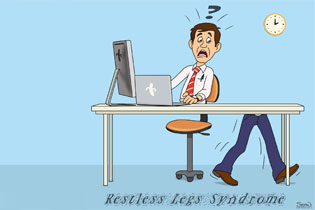
People who have RLS get an uncomfortable urge to move their legs when they are at rest. They describe the feeling as crawling, creeping, pulling, or itching. And they say the feeling is deep in the legs – not on the skin – usually below the knees. These symptoms usually get worse as the day moves on, and they are worst at night. The symptoms can be especially bad when trying to stay still to read a book, watch television, or fall asleep. But people can make the feeling go away temporarily if they walk around or move their legs. Some people with RLS find that their legs move on their own while they are asleep.
In short, the symptoms:
- Happen when you are at rest
- Go away if you move your legs on purpose
- Are worst at night
- Sometimes include the legs moving on their own during sleep
Together, the symptoms of RLS can make it hard to get a good night’s sleep. People with the condition often feel tired during the day.
Is there a test for RLS?
There is no single test that confirms RLS. Your doctor or nurse should be able to tell if you have it by asking about your symptoms and doing an exam. Still, it is possible that your doctor or nurse will decide to send you for a “sleep study,” to be sure of what is happening.
For a sleep study, you spend the night in a lab, and you are hooked up to different machines that monitor your movements, heart rate, breathing, and other body functions.
Is there anything I can do on my own to feel better?
Yes. You might feel better if you:
- Do activities that keep your mind alert during the day, such as crossword puzzles
- Get moderate regular exercise
- Massage your legs (or have someone massage them)
- Apply heat to your legs with heating pads or by taking a warm bath
- Avoid taking medicines that can make RLS worse – These include antihistamines
Should I see a doctor?
See your doctor or nurse if your condition bothers you, or if it keeps you from getting a good night’s sleep.
How is RLS treated?
Some people with RLS do not need medicine for it because they have mild symptoms that don’t bother them very often. If treatment is needed, there are several medicines doctors can suggest.
In people with RLS who also have a severe form of kidney disease called kidney failure, the RLS might improve with a treatment called haemodialysis (also known as just dialysis).
What if I am pregnant?
If you are pregnant, ask your doctor whether you need iron supplements and which non-medicine measures are suitable. Most medicines used for RLS have not been proven safe in pregnancy. For severe symptoms, your doctor may consider suitable medication after assessing benefits and risks. The condition usually goes away or improves substantially after childbirth.
Frequently asked questions
How is restless legs syndrome diagnosed?
Diagnosis is usually based on your symptoms and a physical examination. Testing is not usually needed, though your doctor may arrange a sleep study to confirm what is happening overnight.
