Related service at Sleep and Lung Care: Sleep apnoea assessment and treatment
What is CPAP and how does CPAP work?
Continuous positive airway pressure therapy (CPAP) uses a machine to help a person who has obstructive sleep apnoea (OSA) breathe more easily during sleep.
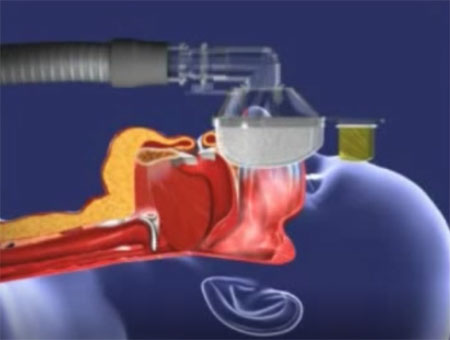
A CPAP machine increases air pressure in your throat so that your airway does not collapse when you breathe in.
Types of CPAP masks:
The CPAP machine will have one of the following attached to it:- A mask that covers your nose and mouth known as a full-face CPAP mask
- A mask that covers your nose only – called a nasal CPAP mask
- A mask that fits directly into the base of your nose, with pillow-type cushions that seal around your nostrils, known as a nasal pillows CPAP mask
Types of CPAP machines:
There are 2 types of CPAP machines, ones that offer fixed air pressure and ones that offer automatically adjusted air pressure, often known as Auto or APAP machines. There is no difference in treatment success between the two types of machines (CPAP and APAP). The APAP machines are generally more expensive than CPAP. Paying the extra cost for an APAP machine is generally not needed or recommended except in some selected cases.How Does CPAP Work?
To understand how a CPAP machine works, you should know how obstructive sleep apnoea works. Obstructive sleep apnoea occurs when the throat muscles and tongue collapse into the airways during sleep, blocking airflow. This airway blockage sends a message to the brain that the body needs to breathe, awakening it from sleep to take a loud, gasping breath. Individuals with mild obstructive sleep apnoea experience 5-15 of these episodes per hour of sleep, while individuals with severe obstructive sleep apnoea experience more than 30. A CPAP machine works by continuously blowing gentle, pressurised air through the airway. The increased air pressure prevents the airway from collapsing when you breathe.CPAP machine effectiveness
When used as directed, CPAP therapy can improve quality of life for people with obstructive sleep apnoea. You may notice less snoring, fewer breathing obstructions and less daytime sleepiness. CPAP can improve sleepiness and quality of life and may lower blood pressure. A reduction in heart attacks or strokes has not been consistently demonstrated in trials.Difficulties with CPAP
Problems that may occur with CPAP include:- Dry nose and sore throat.
- Nightmares and excessive dreaming during early use.
- Nasal congestion, runny nose, and sneezing.
- Irritation of the eyes and the skin on the face.
- Abdominal bloating.
- Leaks around the mask because it does not fit properly.
Frequently asked questions
Is an auto-adjusting (APAP) machine better than fixed-pressure CPAP?
No. There is no difference in treatment success between fixed-pressure CPAP and auto-adjusting APAP machines. APAP machines generally cost more, and the extra cost is usually not needed except in selected cases.
