What is sleep apnoea?
— Sleep apnoea is a condition that makes you stop breathing for short periods while you are asleep. There are 2 types of sleep apnoea. One is called “obstructive sleep apnoea,” and the other is called “central sleep apnoea.” In obstructive sleep apnoea, you stop breathing because your throat narrows or closes. In central sleep apnoea, you stop breathing because your brain does not send the right signals to your muscles to make you breathe. When people talk about sleep apnoea, they are usually referring to obstructive sleep apnoea, which is what this article is about. People with sleep apnoea do not know that they stop breathing when they are asleep. But they do sometimes wake up startled or gasping for breath. They also often hear from loved ones that they snore.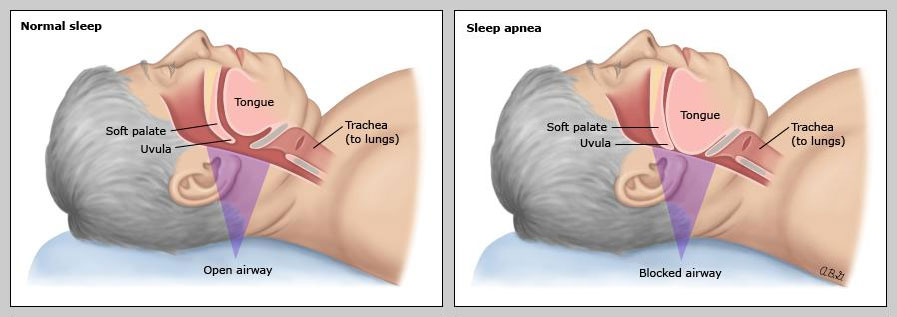
What are the symptoms of sleep apnoea?
— The main symptoms of sleep apnoea are loud snoring, tiredness, and daytime sleepiness. Other symptoms can include:- Restless sleep
- Waking up choking or gasping
- Morning headaches, dry mouth, or a sore throat
- Waking up often to urinate
- Waking up feeling unrested or groggy
- Trouble thinking clearly or remembering things
Should I see a doctor or nurse?
— Yes. If you think you might have sleep apnoea, see your doctor.Is there a test for sleep apnoea?
— Yes. If your doctor or nurse suspects you have sleep apnoea, he or she might send you for a “sleep study.” Sleep studies can sometimes be done at home, but they are usually done in a sleep lab. For the study, you spend the night in the lab, and you are hooked up to different machines that monitor your heart rate, breathing, and other body functions. The results of the test will tell your doctor or nurse if you have the disorder.Is there anything I can do on my own to help my sleep apnoea?
— Yes. Here are some things that might help:- Stay off your back when sleeping. (This is not always practical, because people cannot control their position while asleep. Plus, it only helps some people.)
- Lose weight, if you are overweight
- Avoid alcohol, because it can make sleep apnoea worse